


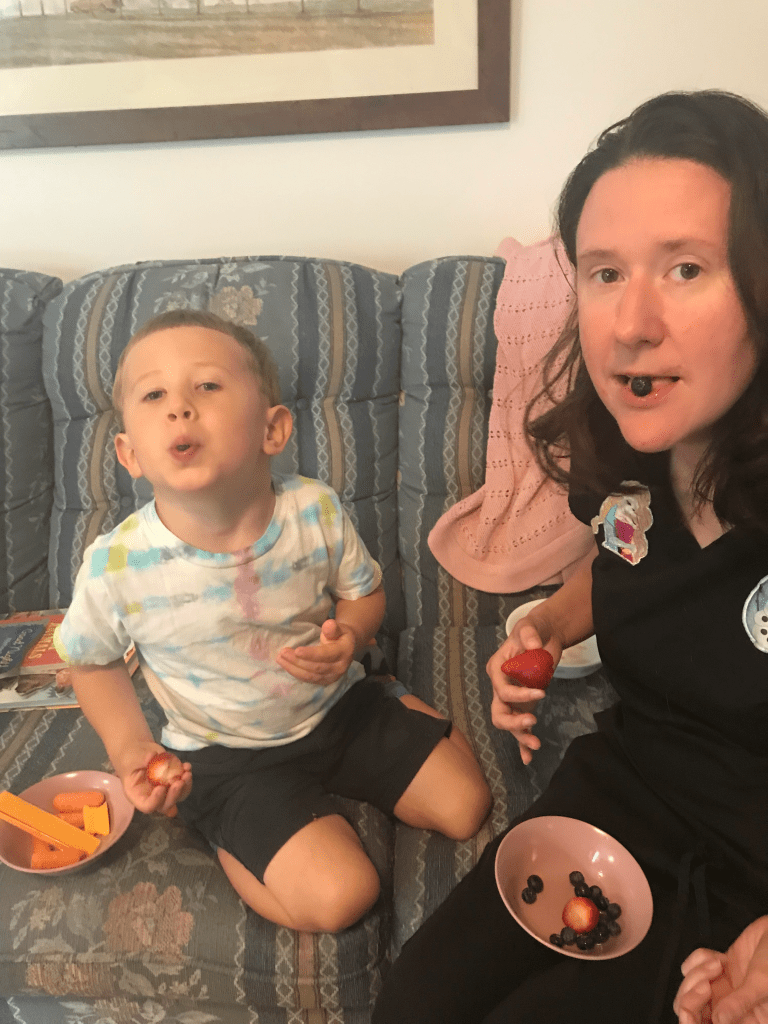
Feeding and eating are daily activities that are “fundamental to living in a social world; they enable basic survival and well-being” (Christiansen & Hammecker, 2001, p. 156). In the hustle, bustle of life, our environments pressure us to eat in a hurry. What if we slowed down to really think about feeding from an environmental, biological, sensory, and occupation-based perspective?
Occupational therapy practitioners (OTP) are important members of the feeding therapy team through providing education on sensory strategies, interception, ergonomics (body positioning), and tactile techniques/sensory motor exercises to facilitate the relaxation of the body and mind.
Interoception is the sensing of internal signals from your body; like an emotion, the hunger drive is a unique process for each child influenced by a variety of contextual and biological factors. It can involve both thought, routine, and/or biology. Self regulation visuals such as my Zookeepers Program, the Zones of Regulation, and the Alert Program can give kids tools that help him understand/articulate their body processes.
It is important to have specialized therapists trained to assess interception and sensory processing. By understanding a child’s unique sensory patterns, individualized strategies can promote appropriate self regulation (arousal levels) to fit particular environments.
OTP’s are skilled at using a holistic lens; while some practitioners may view a client’s problem from a single theoretical lens and offer a “quick fix”, a specialist recognizes the interplay of many sensory factors that can contribute to a behavior and looks for medical, environmental, social, mental, and physical challenges that can be contributing to the problem. We can help you rule out sensory aversions and address care in a strengths-based way that encourages connecting with your kids through making the experience of play meaningful, fun, and safe.
From games to sensory exploration protocols, you need a team devoted to applying innovative, evidence-based, and theory driven therapy. Empowering kids is my niche.
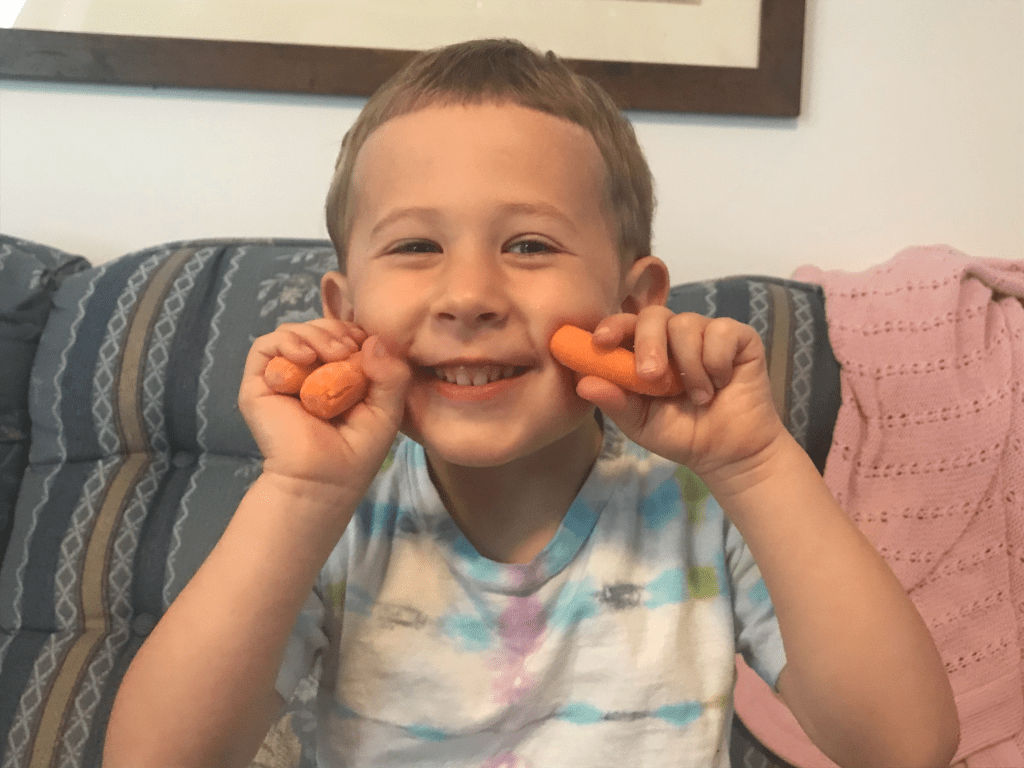
Feeding Tips:
- Help your child feel safe and in control of the eating situation; give them choices – when, where, how, what.
- Offer toys and tools to enrich the sensory experience. Plus, grippers promote fine motor development.
- Make it not only about the food; I have built tooth pick houses, bridges, and cars with fruit pieces. We draw roads of yogurt on wax paper. We make faces with cheese. We make a forest broccoli and animal crackers.
- Encourage safe exploration. Celebrate when your child touches, licks, kisses, or takes a small bite of a new food.
- Model and demonstrate through use of a favorite character, a doll, or a peer.
- Siblings and family member are also key models in making food a SAFE experience. Brain imaging shows that repeated negative experiences can lead to trauma and change the structure of the brain. Likewise, positive experiences have the power to remap cortical areas in the brain.
- TAP INTO THE SENSES- Part of OT therapy is learning to use and talk about each of our EIGHT senses – see, smell, touch, taste, hearing, proprioception, vestibular, and intereoception. Sensory therapy can give you tools like specific movements and body work to promote calming. It’s hard to think when you are in a heightened state of arousal. What I love about OT is it gives kids tools to understand and take care of their bodies; first calm physically and then it is easier to think more clearly.
- Ergonomics- I have attended home modification and lifestyle redesign trainings from University of Southern California which have helped me use my understanding of posture, ergonomics, and biomechanics to design spaces and tools specific to a client’s physically assessed needs (range of motion, strength)
- Make it FUNCTION based- Research shows that people grow stronger and have improved range of motion when reaching for an actual target/doing something meaningful like a card game versus just doing rote exercise. This is where an OT can really help assess what is meaningful to your child and figure out how routines can be set up that best meet your kid’s sensory/physical needs.
- Find someone who can work with the sensory systems; from body work to specialized swinging, calming could be the missing piece to helping empower your child to feel in control and initiate exploration.
- Be patient- true rewiring of the brain can take time. Exposure to foods may “prime” the brain to be more open about trying it. Many experts say it takes 16 trials to really know if you like/don’t like a food when you try it.
A specialized program takes into account physical and cognitive development for your child’s age. Seek out an OT (and other specialized members of the therapy team) to learn what milestones are appropriate for your child’s age and what tools (external or internal) will promote a sensory SAFE environment for your child.
Got a complex kid? A gifted kid? A developmental behind kid? No problem! My Sensory SAFE program strategies can help you understand the relationship of sensory processing to anxiety and the biological processes behind anxiety/behaviors.
Got a creative kid? A kid who likes watching characters and playing games? My SuperMe, SuperYou AnyBODY can be a SuperBODY is for you! This program works for individualized therapy or for groups! My Lexington, Kentucky clinic (Sunny Day Therapy) offers a space specifically designed for facilitating this program as both a therapy and training method for therapists/teachers.
Got a kid who loves animals? The Zookeepers will teach you about self regulation in a fun way.
I love speaking at schools, hospitals, podcasts, etc. My CEU programs are really taking off with worldwide interest. This month, I was featured on BU’s (Boston University) HealthMatters podcast and hosted a zoom lecture/discussion for BU’s occupational therapy program. I was excited to interact with fellows from the Literature and Medicine fellowship from California to Hong Kong.
Give me a call at 859-339-4235 to learn more about my specialized programs, therapy intensives, and individualized therapy process for your kids. Some areas I can help: executive function, play, feeding, bodywork (babies and kids), sensory therapy, socialization, child and infant development, fine and gross motor skills, mental health and core/pelvic floor strengthening (for moms, too- maternal health). I specialize in helping kids, babies, and families. You will be equipped with a tool kit of strategies to empower you and your kids. Early intervention and prevention are key in promoting brain plasticity, strength, and wellness.
- Pictures are of my own son helping me “practice” and “prepare” for occupational therapy sessions. Like most kids, he does better with tasks like trying foods when he thinks he is helping or teaching someone else.


 Sunny Day Therapy's Blog- Helping Children & Caregivers Shine, Do, and Thrive
Leave a reply to skdclark Cancel reply